
Communicating Responsible Gambling: What Italians and Opinion Leaders Are Asking For

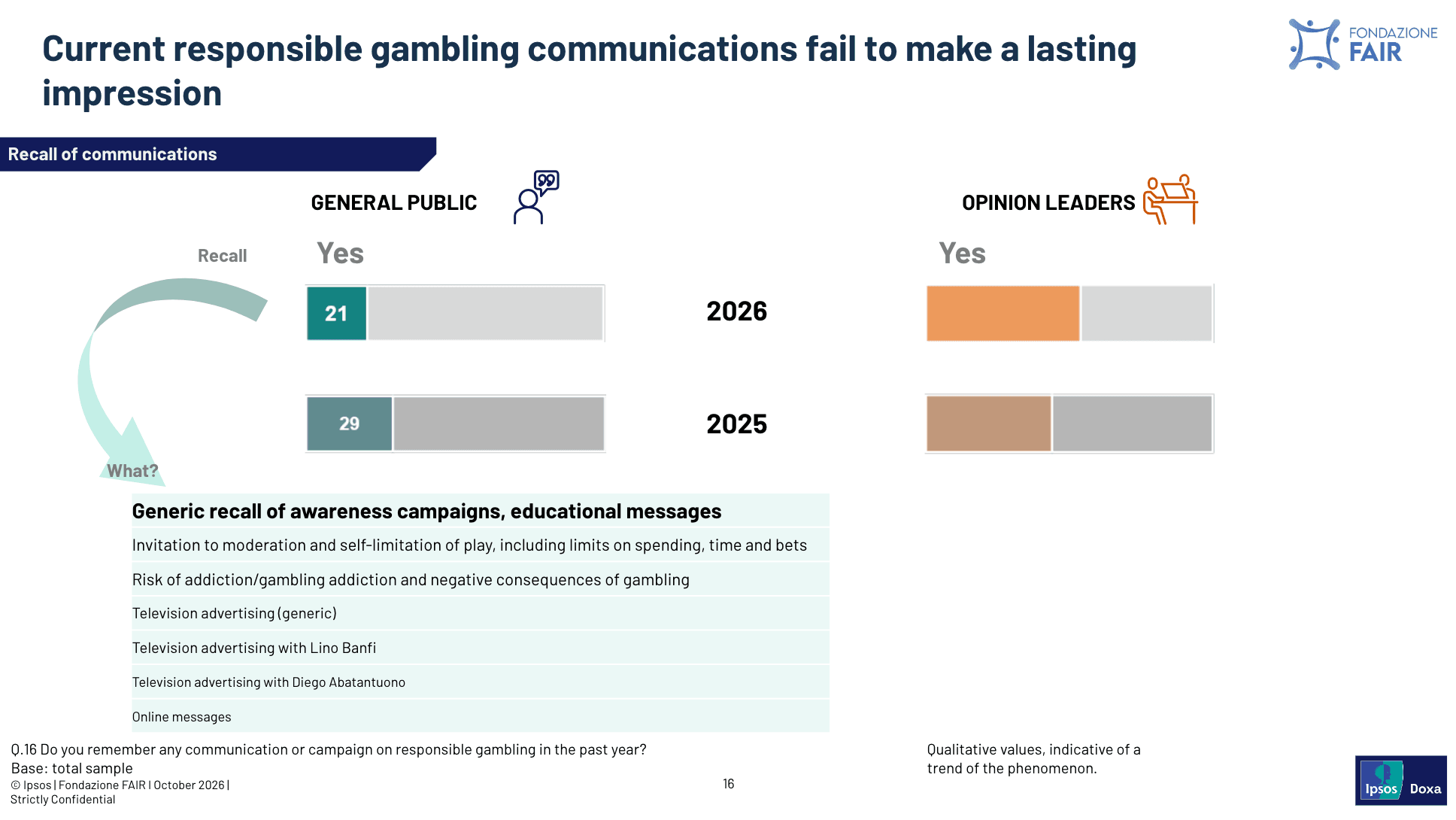
Only 21% of Italians recall seeing a responsible gambling campaign in the past year, down from 29% in 2025. This is one of the findings of the 2026 Responsible Gambling Observatory, the FAIR Foundation’s research conducted with Ipsos Doxa and presented on 14 October at FAIR Forum 2026. The study coincided with the launch of the new guidelines issued by AgCom for campaigns against gambling disorders.
The survey involved 1,000 people aged 18 to 70, both gamblers and non-gamblers, and 30 opinion leaders from associations, regulatory authorities, public administration, the Catholic community and the communications sector. The decline in recall goes hand in hand with high expectations: 80% of Italians believe communication plays a fundamental or important role in prevention, a figure that rises to 92% among those who consider the consumer protection measures introduced by Legislative Decree 41/2024 to be effective. One in three Italians believes current efforts to prevent problem gambling are adequate.
Recommendations for a responsible campaign
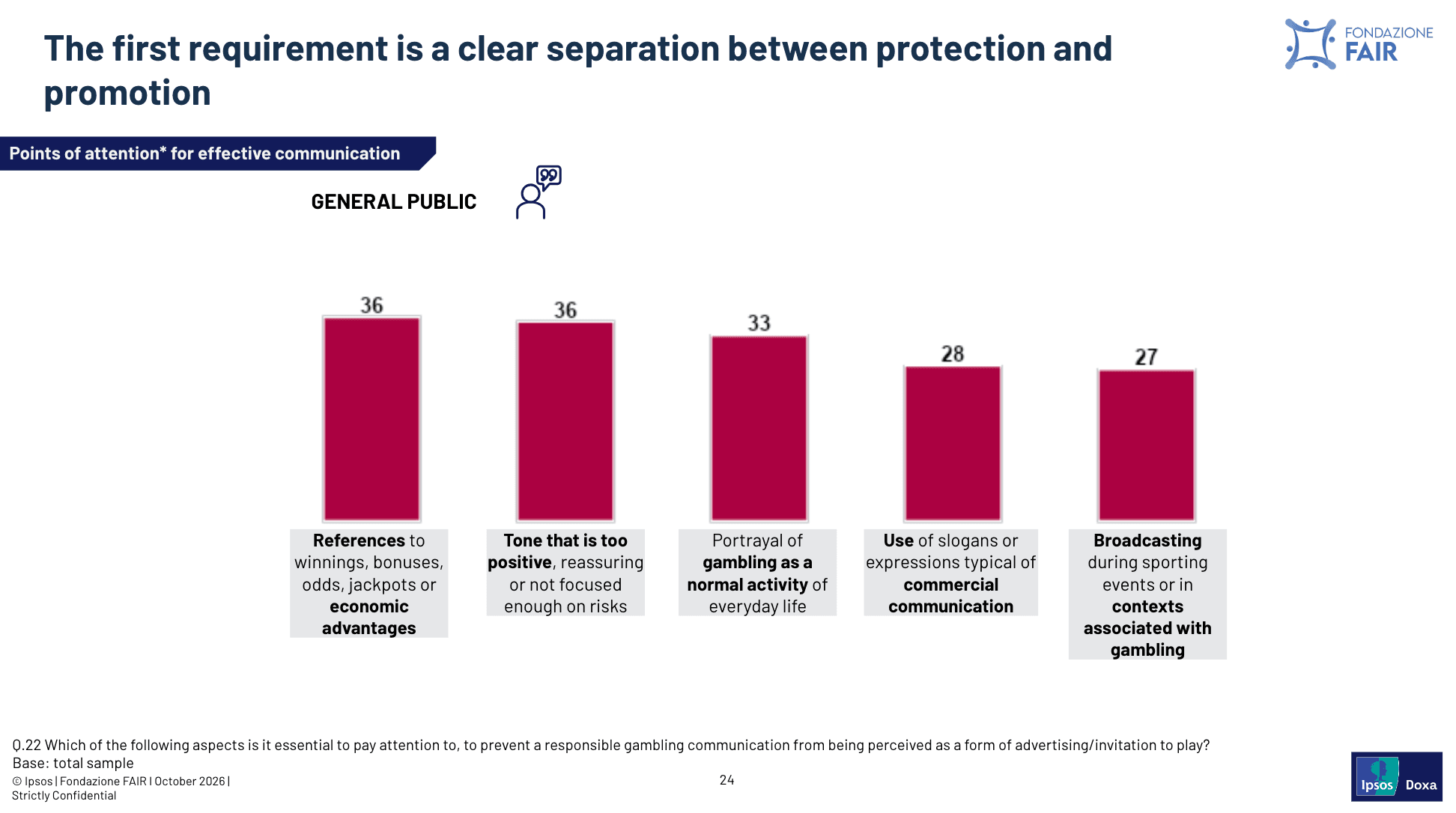
The research clearly identifies what to avoid when creating an information campaign on responsible gambling: references to winnings, bonuses or jackpots (36%), an overly positive or reassuring tone (36%), portraying gambling as a normal part of everyday life (33%), slogans typical of commercial advertising (28%) and airing during sporting events (27%). Particular care is also needed in the use of celebrity endorsers.
Views on the operator’s brand are more nuanced: it helps distinguish the legal offering from the illegal one and can signal that the operator is taking responsibility, provided the campaign remains focused on consumer protection. The ban on including links to gambling products is viewed favourably.
What makes a campaign useful
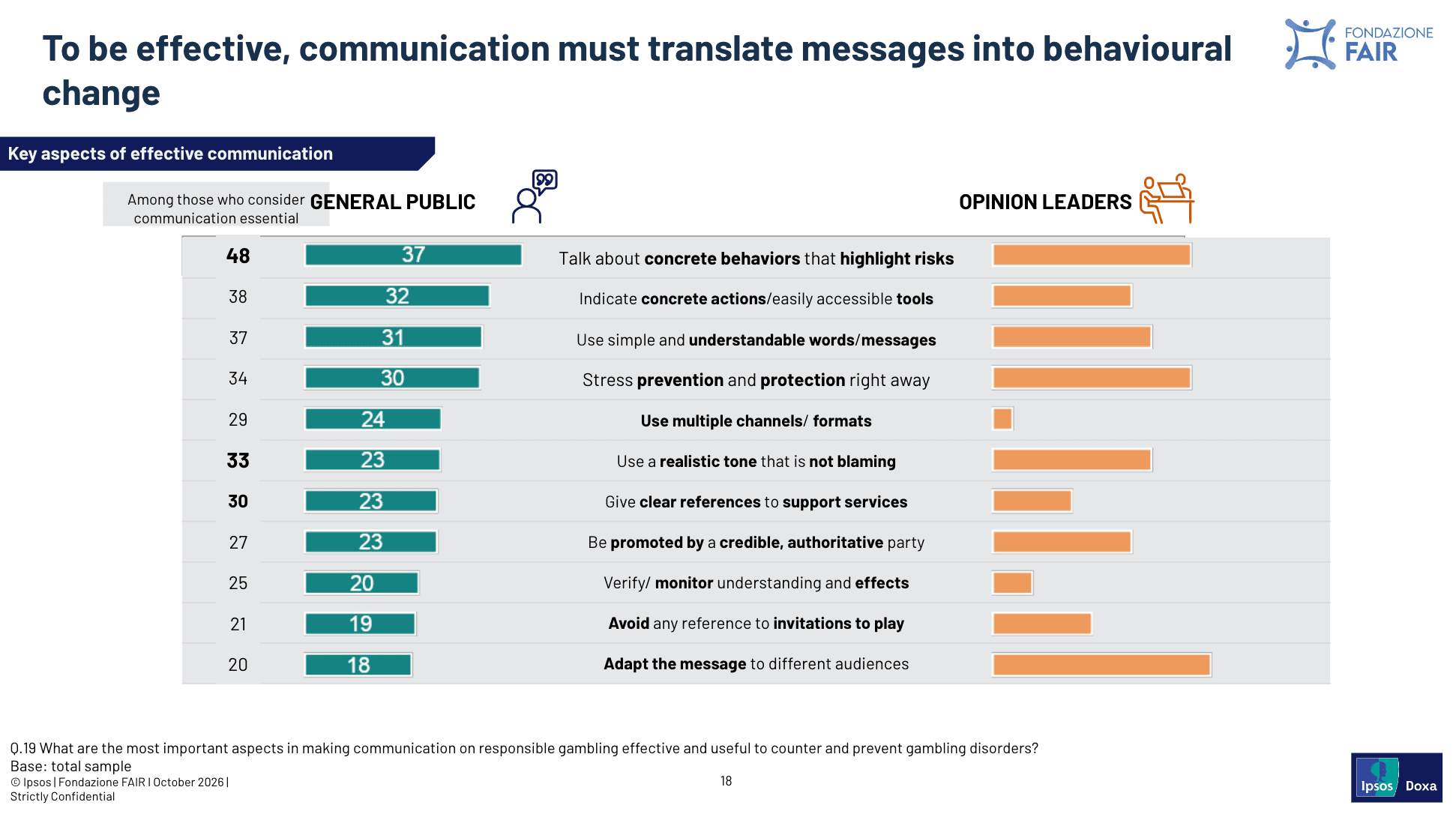
Respondents reward a concrete approach: describing behaviours that signal risk (37%), pointing to accessible tools such as limits, breaks and self-exclusion (32%), using plain language (31%) and making it immediately clear that the message is about prevention (30%). The warning signs to highlight first are losses increasing over time (56%), more frequent or larger bets (48%) and very long or late-night sessions (44%).
Young people: tailored messages, at school, in sport and on social media
Among the audiences requiring the most attention, Italians point to minors, who should be reached in educational and institutional settings (42%), and young people aged 18 to 24 (36%). Opinion leaders describe the attention paid by families, schools and peer groups as still patchy, and call for direct, non-patronising messages that talk openly about betting and explain how odds work. The use of celebrity endorsers and influencers is considered risky precisely for younger age groups.
Guidelines: the real test is enforcement
Opinion leaders consider the new guidelines to be on the right track: messages with a preventive purpose, no incentivising elements, attention to the context and placement of campaigns, and protection of minors, young people and the elderly. Their requests to institutions concern enforcement. The risk they flag is that bans could be circumvented through sponsorships, brand overexposure or communications presented as merely informative. Hence the call for proportionate penalties: a fine lower than the economic value of the campaign in question loses its deterrent effect.
The proposals put forward include a joint campaign backed by all licensed operators and signed by the regulator, along the lines of public service advertising, and an independent third party – competent and free from economic interests – able to measure what changes over time. The public identifies the most useful indicators as greater awareness of the risks (42%), a reduction in average spending per player (38%) and an increase in reports of at-risk behaviour (38%).
“The research shows that the path set out in the guidelines just published by AgCom is the right one to launch a communication strategy that puts the prevention of problem gambling at its core and provides gamblers, especially younger ones, with clear and complete information about the risks. Through a dedicated communication Observatory, the FAIR Foundation will monitor the effectiveness of these communications and make the results available to all stakeholders,” said Stefano De Vita, Director General of the FAIR Foundation.
The full report is available in the Research section of the FAIR Foundation website.
Sign up for our newsletter and keep up to date with Fondazione FAIR